Saturday, June 14, 2014

Sleep Paralysis


Over the centuries, a phenomenon known as sleep paralysis has affected millions of people around the world. Sleep paralysis by definition is a phenomenon in which a person upon awakening becomes unable to move and may also be associated with horrifying visions such as that of demons or monsters. This usually causes the person to panic due to the inability to react hence being paralyzed. Throughout history and to this date, scientists differ with religious scholars on the explanation of sleep paralysis. Through this essay, I will try to demonstrate the concept from both the paranormal and medical points of view.

In most Islamic and Arabic speaking cultures, sleep paralysis is referred to as ‘Jathoom’. Jathoom is believed to be a type of Jinn which in Islamic and Arabic mythology is a supernatural infernal creature that lives in the unseen world. The Jathoom sits on the chests of its victims, choking them. Mothers used the frightening story of the Jathoom to warn their children of what would happen if they did not pray on time or not pray at all.  Scholars believe that the Jathoom can be avoided by reading specific verses from the Quran and/or by sleeping on your right side.

On the other hand, there is also a scientific explanation to what causes sleep paralysis. It is said that humans go through certain stages of sleep. The deepest stage is known as the Rapid Eye Movement or REM stage. During the REM stage, the body goes through a phase called muscle atonia in which muscles are paralyzed and unable to move. This is so that the person does not act out his/her dream. When a person’s REM sleep is disrupted to the sudden awakening caused by a nightmare or such, the person wakes up paralyzed not fully recovered from the paralysis caused by muscle atonia. When this happens, the person panics and because that person is not fully awake, he/she starts to hallucinate. This usually lasts for a few minutes before the person either completely wakes up or simply goes back to sleep. Scientists say that the Jinn theories can be debunked as not all people see or hear Jinn when they encounter sleep paralysis. People see what scares them the most, which can be a murderer, a monster or their room devoured by flames.

In conclusion, no matter what causes sleep paralysis, all who experienced it would agree that it is a gruesome experience. On the long term, sleep paralysis can lead to a huge impact on the health of its victims. Therefore, doctors should start an awareness program to clear out confusions while parents should teach their children how to avoid sleep paralysis rather than fear it.

Thursday, June 12, 2014

Construction Workers Death in the UAE


The United Arab Emirates thriving economy is greatly supported by the construction industry. Construction in the UAE is in continuous growth as the demand on buildings such as hotels, towers and skyscrapers are on the rise. While the country is vertically expanding, construction workers are faced with a list of challenges concerning their safety and well-being. On top of that list, is the risk of falling.

The numbers of fatalities and injuries within construction sites in the UAE have been fluctuating throughout the previous years. According to recent studies, approximately half of all construction site accidents in the country are a consequence of falling. The reason this is so, could be attributed to many factors, mainly, the poor implementation of workplace safety guidelines and procedures.
In January 2012 and in just 24 hours, a worker in Abu Dhabi met his fate after falling from the 12th floor. While in Dubai, two workers died due to scaffolding. After investigations, it was concluded that those men working in poor weather conditions, which clearly indicates the carelessness of the employer. In another case, two window cleaners died when their maintenance cradle failed after four hours of hanging. Investigations showed that the cradles were not periodically inspected, although cradle manufacturers state that their equipment should be inspected on quarterly basis.

UAE Health and Safety statistics (sample 2008-2009)

2008
2009
Number of projects
388
479
People working on-site
296,093
276,323
Man-hours worked
872,485,818
887,072,131
Lost-time incidents
690
530
Fatalities
20
10
Lost-time incident rate
0.0791
0.0597
Fatality frequency rate
0.0023
0.0011
Source: Build Safe UAE


The HAAD Height Aware Program is a program initiated by the Health Authority of Abu Dhabi, aiming to provide free resources to employers and employees to raise awareness of the dangers affiliated with working at heights. Abu Dhabi Environment, Health and Safety Center, a local regulatory body established by the Executive Council of Abu Dhabi with the collaboration and guidance of OSHA (Occupational Safety and Health Administration), has defined a set of standards and regulations to ensure the safety of construction workers through minimizing and preventing hazards in construction sites.

The United Arab Emirates has shown great efforts in its pursuit of hazard prevention. Nevertheless, the UAE lacks a federal authority that monitors and regulates workplace health and safety. Once a federal organization is initiated and nationwide legislations are established, the UAE will be on its path to a safer and more productive workforce.

Saturday, May 17, 2014

Overpopulation


Overpopulation, also known as population explosion, is a phenomenon that has caused hysteria among scientists and demographic specialists. Fatalists believe that overpopulation is the path to the apocalypse. While others think that overpopulation is simply part of the course of nature. Nonetheless, all agree that overpopulation has had and will continue to have a large impact on modern day politics.
Overpopulation has become the focus of many discussions and the axis of many debates, as it is one of the most arguable, debatable and controversial topics of our time. The question that has yet to find its answer is: Is it really happening or is it a hoax?

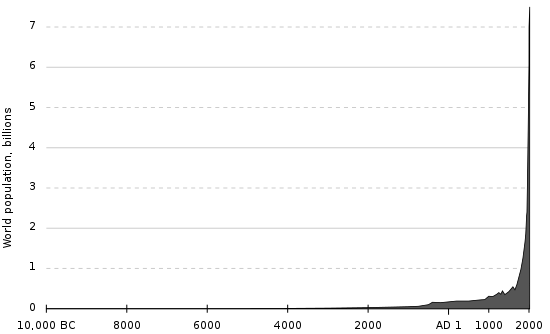
Statistics have shown that the human population of earth that is now around seven billion, has rapidly tripled in the last seventy years, and is moving towards nine billion in the next five to six years. According to one study, for the world to provide a sustainable habitat for mankind, human population must not exceed four billion.
The People’s Republic of China has been the first to address this problem by implementing the “One-child policy”. Although many people see China’s scheme for population control as a violation of human-rights, it has not only slowed down the rate of population expansion, but has also decreased infant mortality while dramatically increasing the life expectancy of its people.
Overpopulation has also acquired its share of attention in the media. Daniel Quinn, the author of a book named Beyond Civilization, has linked overpopulation to the excessive and unnecessary food demand. He also stated that humans are not capable of destroying earth, but only able to destroy it as their habitat.
Population explosion has also appeared in many works of fiction. An example is Dan Brown’s mystery-thriller novel Inferno, where the “antagonist” is a geneticist that plans to unleash a deadly plague to solve the problem of overpopulation. Another example is Christopher Nolan’s upcoming film Interstellar in which earth can no longer sustain human life form due to overpopulation and global warming; therefore, humans travel to other solar systems in search for a new habitat.

On the other hand, there are people that believe that the rapid population increase is natural and nature has its ways in neutralizing the effects of this phenomenon. For instance, British author and political activist Robert Newman believes that the problem is not that there are too many people on earth but that too few own too much.
A documentary called The Great Population Hoax analyzes demographic statistics while comparing popular myths regarding overpopulation with undeniable facts. The documentary states that prosperity and economic development do not depend on access to land and natural resources as most of the poorest people in the world live in Africa although it is abundant with natural resources. Also, rapid population growth and high population densities are not an obstacle to growth as most populated areas in the world are the richest. It also states that poor infrastructure is the main cause of famine, not population growth.

In my opinion, in terms of resources, overpopulation is indeed a global crisis because as the population rises, food supply must also rise as the demand increases. Once the world has reached its limits, the developing countries will fail to support their people.

Friday, May 16, 2014

Test 1


Q1)
Critical Thinking is a type of rational, reasonable, reflective thinking that aids analysis and decision-making. A critical thinker must be open-minded, analytical, rational and unbiased to be able to truly analyze facts and state valid points.

Q2)
Barriers to critical thinking include:
1-      Egocentricity:                                    when a person believes all topics are relative to oneself.

2-      Prejudice:                                           When a person forms an opinion before looking at the facts.

3-      Social conditioning:                        When a person is brought up to act in a manner that is acceptable by one’s society.

4-      Limited frame of reference:       When a person has little or no background in the matter discussed.

5-      Drone mentality:                             When a person has no interest in the world around him/herself.

An example of prejudice is when a religious person neglects scientific facts from a non-religious person because he/she considers the non-religious person an “infidel”.
An example of limited frame of reference is when a person that neither studied medicine nor read any medical journals or articles but still chooses to debate the cure of HIV with a doctor.

Q3)
A fallacy is when an argument is unjust or invalid due to poor critical thinking and other related factors.

Causes of fallacies may include:
1-      Inability:                                              When someone states that an argument is wrong because on
                                                               cannot understand it.

2-      Ignorance:                                          When a person believes something is true because he/she
 cannot prove or disprove it.
3-      Personalizing an argument:             When a person verbally attacks his opponent in a debate rather
  than his argument.

4-      Norms and beliefs:                         When a person refuses to accept the facts of another person’s
argument because it contradicts with his beliefs, whether religious, social or personal.

5-      Assuming all criticism is negative (example):
When a religious person criticizes evolution, an agnostic or atheist might call the religious person delusional. When a non-religious person criticizes genesis, the religious person might call the non-religious person crazy or ignorant.


Q4)
Benefits of critical thinking:
-          Increased attention to detail.
-          Increased observation.
-          Versatile analyzing skills.
-          Ability to read between the lines.
-          Ability to conclude the key points of a message or text, without being distracted with meaningless details.

A critical thinker is a keen observer and is very attentive to detail. Critical thinking is considered a soft skill that with time and practice develops into insight and intuition which enables critical thinkers to apply their skills in a wide variety of fields and tasks, ranging from administrative work to technical and even critique of film, literature, music and art.